The Harder You Work, The Easier It Gets

There is an interesting thing that happens at gyms. While in a gym you will invariably encounter 2 types of people; beginner and expert weightlifters. There are intermediate weight lifters, but the interesting part is in the difference between the aforementioned two. When you see an beginner try to bench press you will notice that their bar may be comparatively light (less than 135 lbs.), but not only are they struggling, the bar is wobbling like in an earthquake. Conversely, when you see more advance weight lifters, not only are they lifting a heavier load (200 lbs. or more), but as they raise the bar, it’s as level as the bar is straight. There is a lot of physiology behind this phenomenon, it has to do with fast twitch muscles groups, or smaller/stabilizing muscles. when those muscles are developed, not only can they lift heavier weight, and the lighter weight is easier, but their bodies are more adapted to lifting weights.

What implications does this have for us in our everyday life? Well first of all, everything starts off hard. Every new job, workout, sport, hobby starts with you having no idea what to do. It actually feels overwhelming because you don’t even know what you have to learn first. That’s why the bar shakes when newbie weight lifters first start, their body is literally overwhelmed.

What does it take to get better? Well, ask any weight lifter and they will tell you “reps”, or repetitions. You have to do the movement over and over again; such is life. No one gets better without pushing themselves. But pushing yourself can be hard, and it’s uncomfortable, especially when you feel you are being judged by others. It’s natural for humans to want to protect ourselves, that is how are species survived. Our cave dwelling ancestors passed that tendency on to us. In prehistoric times if you were uncomfortable, you were in trouble; for example if you were hungry, food was short. If you felt you were being judged/ostracized that meant your tribe may kick you out, and leave you to fend for yourself. But humans were never meant to “survive”, we were meant to Thrive.

Thriving means overcoming your programming and to find something to strive towards. These are vague terms, but this post is about doing hard work, not finding your passion. Push your limits, or your limits will push you. When you get comfortable in your routine and you stop pushing yourself, your mental and physical muscles atrophy and what was once routine, now becomes work. The walk to the car seems like a workout. Then you will no longer have time or energy for the things you want to do. This how people get into what they describe as being in a “rut”.

Get out, and do that thing that scares you. Get your reps in, and do the 10,000 hours it takes to master something. For me, this is that thing. I am terrified of my work being judged, but I’m choosing to push past that feeling.
How to Improve at Math

Debunking the Myth

You have probably heard that most people either consider themselves a ‘math person’, or not. Really this couldn’t be further from the truth. Most often, early on in grade school some students have early wins, or certain concepts are easy for them to grasp. They receive praise from their teachers and parents, and this reinforces in their mind that they are inherently ‘good at math’. They are then placed in higher level math than their peers, and as a result receive more (positive) attention from teachers, and praise from parents. Conversely, the students that have a harder time grasping the subjects are labeled as just not ‘math people’. They aren’t put in the accelerated courses, and since they are told they aren’t ‘math people’ why would they pay attention, or really try? The worst part is, this could hold someone back from pursuing a certain career, because it’s not in their genes. Think about this, when you hear a young child who can’t pronounce their R’s or W’s are they told they just aren’t ‘english people’? No, that’s nonsense they just need practice and coaching. These are the strategies I used to go from not being a math person, to acing Calculus in college.

Ask Questions

Unfortunately there are no secrets, or quick tips to improving at math. It takes diligence and discipline. First of all, while in class you have to ask questions when you don’t understand something. I know this may feel uncomfortable, but I always ask questions as soon as I am lost. What I realized is most often when I’m confused it is not because I’m dumb or don’t understand, it’s because the professor skipped a step they thought was “obvious”. Highlight parts of your homework you didn’t understand, so you can ask during class discussion. If you really are too embarrassed to ask for some reason keep a highlighter or red pen and write notes in the margin, then ask a tutor or teachers assistant to reexplain. This part will be difficult at first, because they may explain it differently. At first, this will make you feel like you aren’t understanding the concept. But, you will soon realize that most of the time there is more than one way to arrive at the same answer. I remember one time going over the homework, and the professor was doing something completely different than what I had done; but then arrived at the same answer. That was encouraging.

Practice, Practice and Practice

I used to say “The hardest part of Calculus, is the Algebra.” If you take Calculus you will realize that you will have to apply algebraic rules to certain expression before you can apply Calculus operations. This means that while learning upper division math, you still be getting stumped by things you were taught in high school. I didn’t feel like I had a good grasp on Algebra until after I completed Calculus II. So, when a problem incorporates some Algebra, you don’t remember how to do, you have to go back and review. Kahn academy has some great free tools and videos just for this. Going back and watching another lecture on YouTube can also help reinforce something you just learned in class. This will also help you see that sometimes the way a professor says something is what is confusing, and not the actual material that’s confusing. Professor Leonard has a great YouTube channel for this purpose. You will also have to practice a lot of problems, more than what the professor assigned. This can be frustrating, but the pay off will be huge.

Break a Sweat

When doing the homework, it is important to make your brain WORK. By this I mean, you need to get to the point in a problem where you have no idea what to do. When you feel like you want to pull your hair out, and think there is no way to do the problem, that is when your brain is actually growing and learning. If you do a problem start to finish without a care, then you didn’t learn anything. That would be like using a 1 lb. dumbbell at the gym; you did it, but you’re not going to grow. This is most frustrating part, because it does not feel like learning. It goes against everything you have been told about math. If you were a ‘math person’ this would be easy. Once you have gotten to that point, start trying different things, go back and look for mistakes. I once heard someone say “if you don’t know how to solve a problem, look for a problem you do know how to solve and do that part.” Think to yourself “what is this problem actually asking me to find?” Think back to lecture and if the professor solved a similar problem, try and remember what they did. Sometimes you’ll remember steps 1 & 3, but get stumped on step 2. If you remember what the next step is supposed to look like you can sometimes reverse engineer the previous step just by trying to make the problem look like what you think it’s supposed to look like. Sometimes you’ll get it, and sometimes you won’t, but make yourself think before you check the book or ask the tutor.

You Got This

While I was taking Calculus 1, I wrote in my journal once that “I felt like I was at the base of Mount Everest, in a storm with low visibility, and my guide had no idea where to go either.” This came from my frustration with the professors, tutors and myself. I wanted to quit so badly. I didn’t even know that I would eventually get it, I just knew I had to work my ass off. It’s funny to think I could have had a completely different life if I had listened to the people who said “you either get math, or you don’t”.

Below are a link to a few great books that really helped me get perspective on how I could get through this trial of learning math.

Outliers: The Story of Success

Can’t Hurt Me: Master Your Mind and Defy the Odds

Do the Thing, and You Will Have the Power

The above title is a quote from Ralph Waldo Emerson. It sounds interesting, and self explanatory; but there is more to it than meets the eye. The first step is to do the thing. If I told you to fix my car, and you said “I don’t know how”, I probably wouldn’t respond “do it first, then you’ll figure it out.” That’s precisely what this quote is saying.

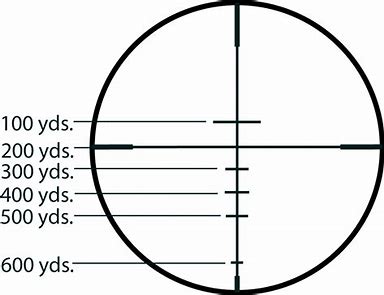
Let’s break it down further, with an example. While I was in Marine boot-camp I had to qualify on the rifle range. Meaning I had to shoot a target from varying distances, and was given a score for how to close to the center of the target the bullet hit. I had to get a minimum score to pass. We had our fist class, and the instructor was explaining how to look through the scope, and how line up the sight (the featured photo is an example of what it looks like). When I first looked through the scope, I could not see the lines described. I thought I was going crazy, or my scope was broken. I was so worried.

After looking at the scope for a while I realized that the moment I looked in, I would catch a glimpse of it, then it would fade away. After practicing this for a full day–looking through the scope then looking away–I could finally see the sight consistently. I ended up getting the highest level qualification (expert).

I don’t know what was wrong with my eyes that I couldn’t see the aiming sight. No one I’ve ever told about this has ever experienced anything like it. The point is, no one told me “if you can’t see the sight, just look away and look back a few times.” I had to learn that on my own, in the moment. There was no way to teach that before I was doing the thing.

I can go on and on with example after example, but the message is pretty simple. No one ever starts with the power to do something. Look at babies, they stand and fall a hundred times before they can walk. They don’t have the power to walk at first, but they do the thing–getting off their butts and move their legs–and then they have the power. Every person you admire, who has accomplished something amazing, started having no idea how to do whatever it is they accomplished. It’s hard to imagine, but there was a time when Michael Jordan didn’t know how to dribble a basketball.

So, get out there, and do that thing you’ve always wanted to do. I just started this blog. I have no idea how to blog, or if I will even be good at it, but I definitely won’t if I don’t try.

(Lastly, I apologize to anyone who knows military/marksmanship jargon; I used scope and sight instead of optic/bullet drop compensator/reticle to make it more understandable for people who don’t know the jargon)

Social Media. Friend or Foe?

Recent history has seen changes in technology like never before. Even in my short 25 years on Earth, I’ve witnessed the massive growth of the internet. Over a decade ago people used to communicate via text message, and would have to wait until they got home to log in to myspace. Today anywhere you go you will see people’s faces buried into their phones, scrolling through the endless social media platforms. The question is not whether things have changed; is this change good or bad?

There is no question that people’s attention spans have shortened. People would rather read something that is in tweet format, anything longer than a paragraph goes over their head. For example, I once took an online math course. In the course there was assigned homework, but in the syllabus the professor very clearly stated “The homework is for practice, I will not be collecting it.” The syllabus was a very reasonable 2 pages long. Yet, 15 of the 32 students in the class posted this same question in the discussion board; “Will the homework be collected?”…

First of all, this tells me that the students didn’t bother to read the syllabus. Secondly, in order to post a question, one of the students would have had to first navigate to the discussion board. Once on that page they could have looked and seen that this question had already been posted, and answered. About 50% of the class didn’t even read the syllabus to find out what was required of them in the class.

So, what’s the deal? How is this a bad thing? Well imagine all the people in this class had the same major, and they end up working in the same company. On their first day of orientation they are bombarded with information, and given company handbooks. Then their first assignment comes, and they are given a brief, and a packet to outline the assignment. So, Friday they all finish their first week, and leave with a mountain of paperwork. Monday comes around, and throughout the day, the new employees keep coming up to the supervisor in charge of the project and ask the same question; a question that was already addressed in the brief. Not only would this be incredibly frustrating, it would also reflect poorly on the person asking the question.

The entire purpose of language is to transmit information to one another. This concept is literally what drives all of advancements in human history. Once humans started writing things down, we no longer had to reinvent the wheel, or figure things out for one’s self. We could build on top of someone else’s work. We went from the first written language some 5,000 years ago, to most of the population having super computer in their pocket today. Not everything written down is important, but if it applies to you, read it!

People often complain about how ‘nothing useful is taught in school’; well learn how to pay attention and take directions.

Motivation is Crap

   You probably read the title of this post and said,

     “Wait a second, a lot of good things have come out of motivation.” Well I’m telling you you’re wrong. By this time of year, January 19, a large percent of people have given up on their New Year’s resolution. Why is that? It’s well documented that NY resolutions don’t last, so why do people still make them? Not that you shouldn’t try, you should. However, you can’t do the same thing over and over and expect different results. So, every year when you say

     “Next year is going to be my year.” you are essentially dooming yourself to repeat the same routine. December 31st you are going to feel motivated, I even get that. I’m human, I think about the endless opportunities that await all of us, but I don’t make a resolution then. A resolution made on December 31st is an emotional resolution. If your resolution isn’t made on personal values, and correct principles, then you’re just spinning your wheels. Hear this:

     Everyone wants to be successful. (motivation)

     Not everyone decides to be successful. (drive)

     The differences in these two sentences become apparent when motivation runs out. A good analogy would be when your car battery starts to run out. You can jump your car, and leave it running a few minutes to let the alternator charge your battery. That’s motivation, you get a jump start on New Year’s Eve, and you hit the gym; that lets your metaphorical alternator give you some juice. A week later, the car needs a jump again. Drive is like putting in a new battery. Now, it doesn’t matter if it’s 3:00 AM and its raining, that car is going to start. Could you imagine jump starting a car at 3:00 AM in the rain? You’d have to pop the hood and get a tarp out so the battery terminals don’t get wet. When you change the battery everything is good on the inside of the car, it’s not as effected by the outside forces.

     Waiting for the new year to start a resolution is like waiting for a jump start. You waiting for that burst of motivation. If only this was this way, or if that was that way, then everything would be good. You’re waiting for external forces to change in internal structures.

     Change yourself, then change the World.

     A lot of people accomplish a lot of things out of motivation. They feel a burst of energy, and they sign up for 10k, or read a book, or enroll in college classes. Those are all great things, but when they go up against the test of time they don’t hold. What good does a college degree do you when you’ve been out of college for a year and haven’t found a job? The euphoria of graduation day seems like a distant memory. When your on mile 20 of a 26.2 mile marathon, you won’t feel motivated. You’ll be cursing yourself. I guarantee you Thomas Edison did not feel motivated after his 100th attempt redesigning lightbulb– nor his 200th, etc. Speaking from my own experience, when I was in marine bootcamp, I did not feel one slight bit of motivation doing push ups in the dirt having a man yell as loud as he could at me.

     So what kept me going? I had decided, from a nonemotional point of view, that I was going to do it. I knew it was going to suck. So when I felt motivated, and strong, I used that and pushed forward. When I felt down, and weak I pushed against that. I made a decision, not a resolution, to keep going.

     You have decisions to make everyday, and today you can decide to make January 19th your day. You might lose a loved one, you might get fired from your job, but it’s up to you to decide where you go from there. You can’t decide what happens to you, but you can decide how you react to it.

     Now ask yourself:

     Is 2020 going to be your year?

Welcome!

If you’ve spent anytime on the internet then you know 90% of it is junk. I grew tired of the constant scrolling through Facebook, Instagram, etc. A lot of the posts and ideas are hilarious too, but 1-3 hours a day is too much. It’s mind numbing, when I started setting timers for my social media I would announce to my girlfriend “well my hour for the day is up.” She would respond “No way, that felt like 5 minutes.”

This constant bombardment of people and businesses fighting for your attention is horrible for your brain. It can effect one’s ability to focus, as well as cause anxiety or even depression. Most people can’t focus on anything longer than a paragraph.

Click subscribe, and learn something empowering and useful before you waste an hour scrolling through social media.

Create your own website, free on WordPress.com.Create your own website.
Start free